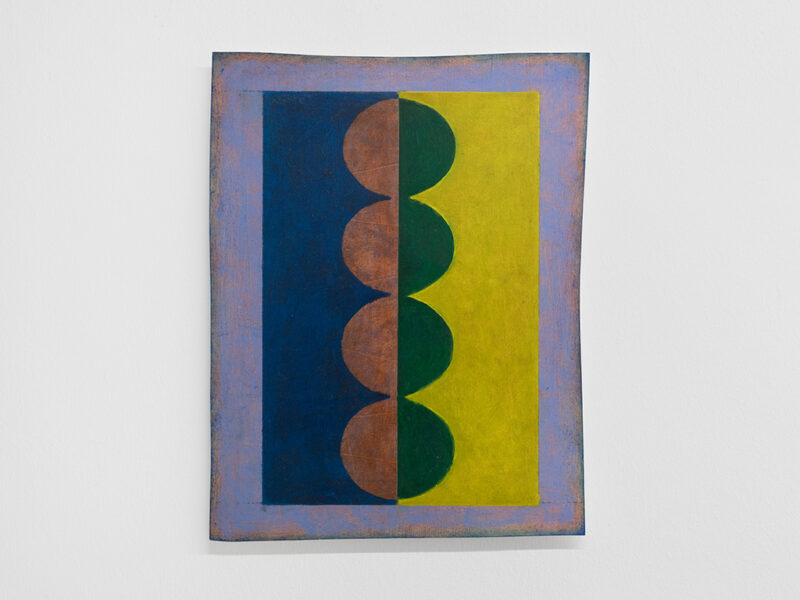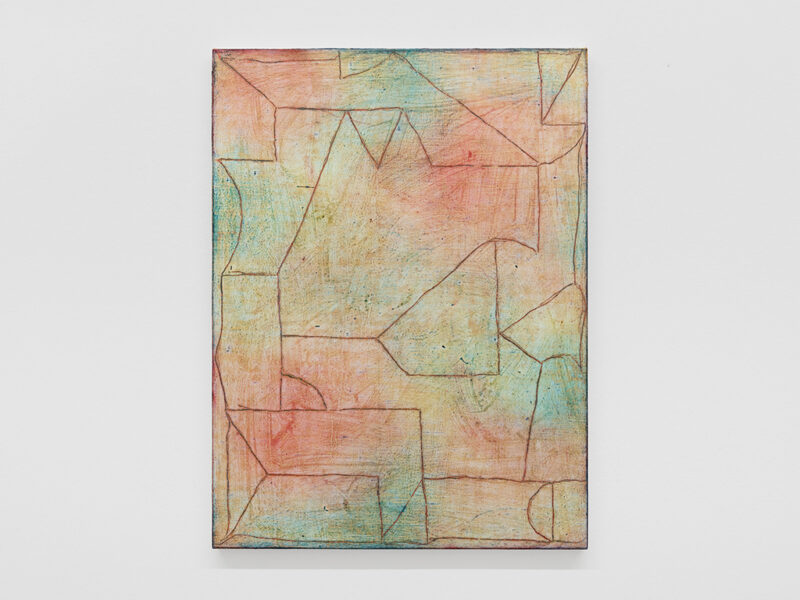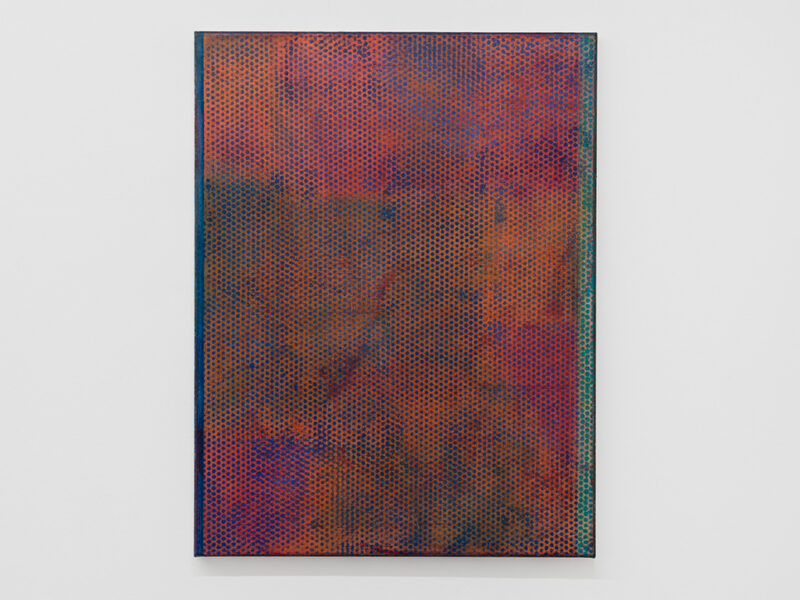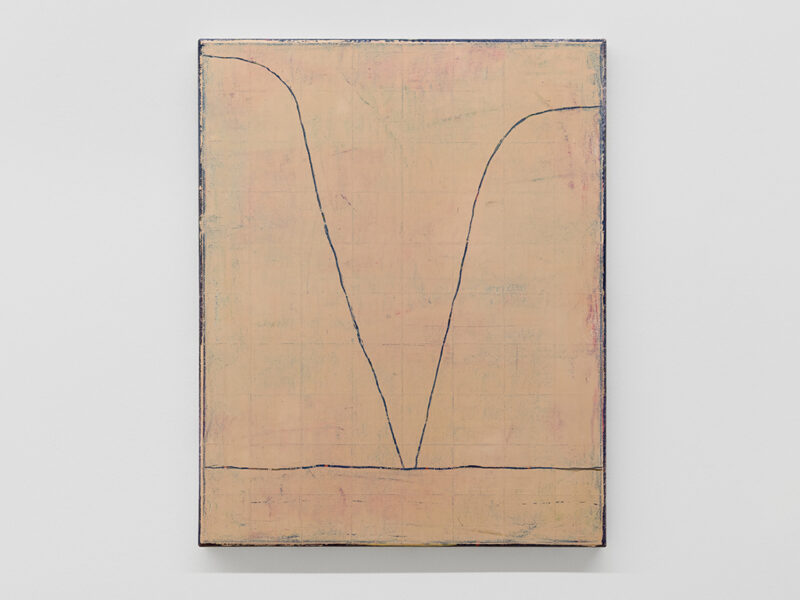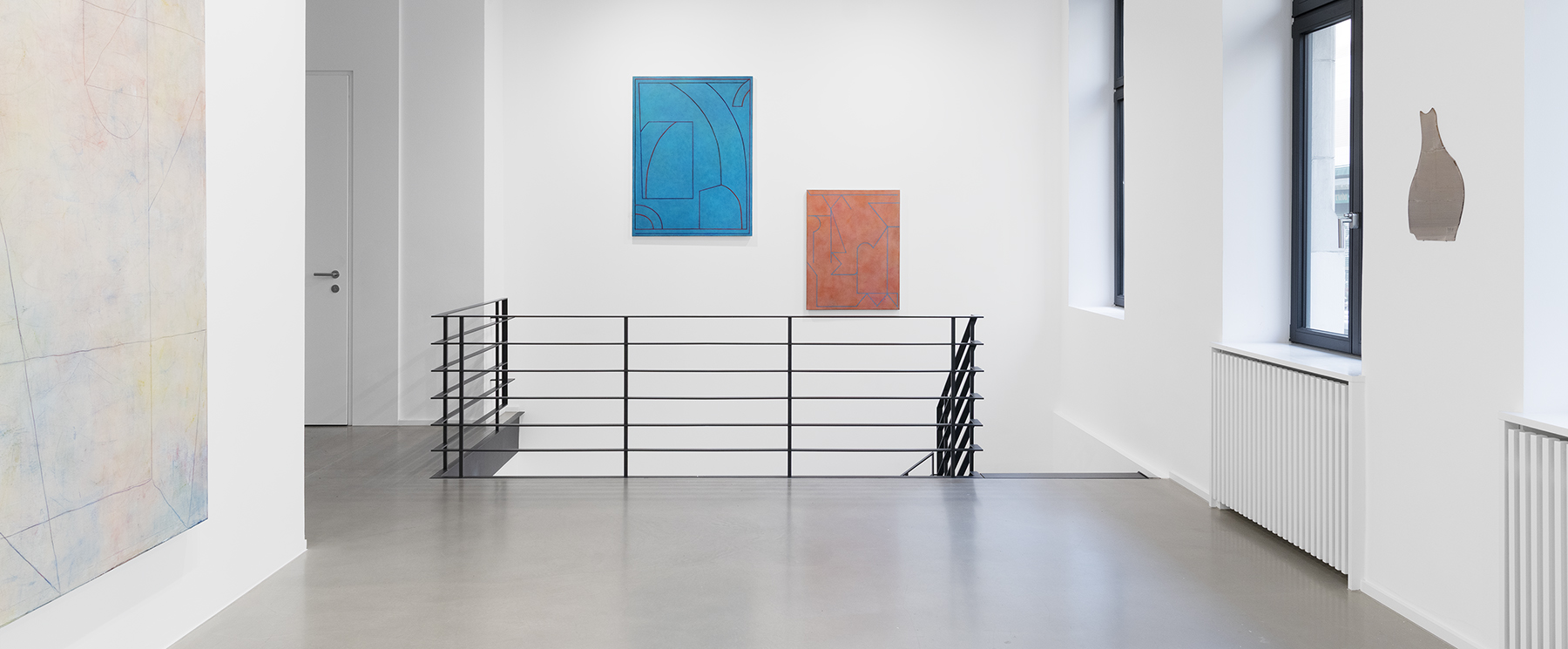
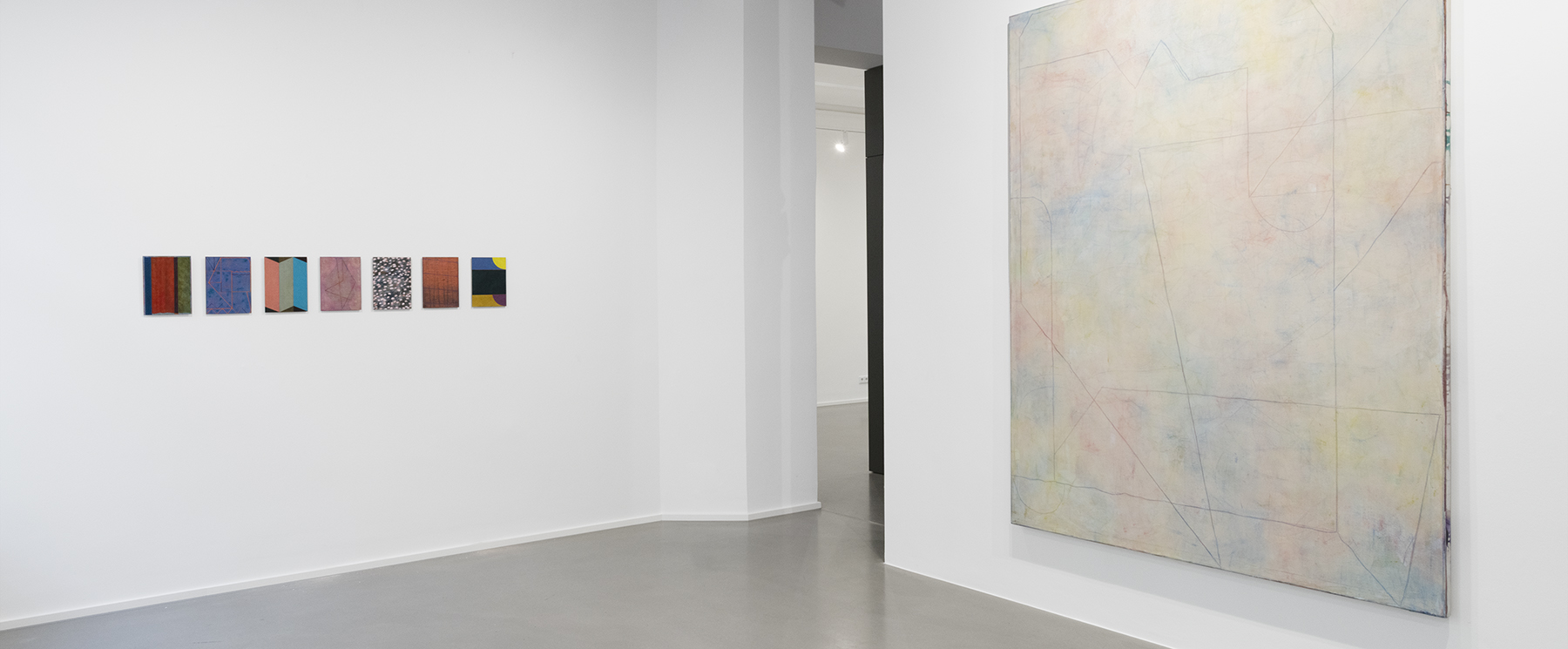
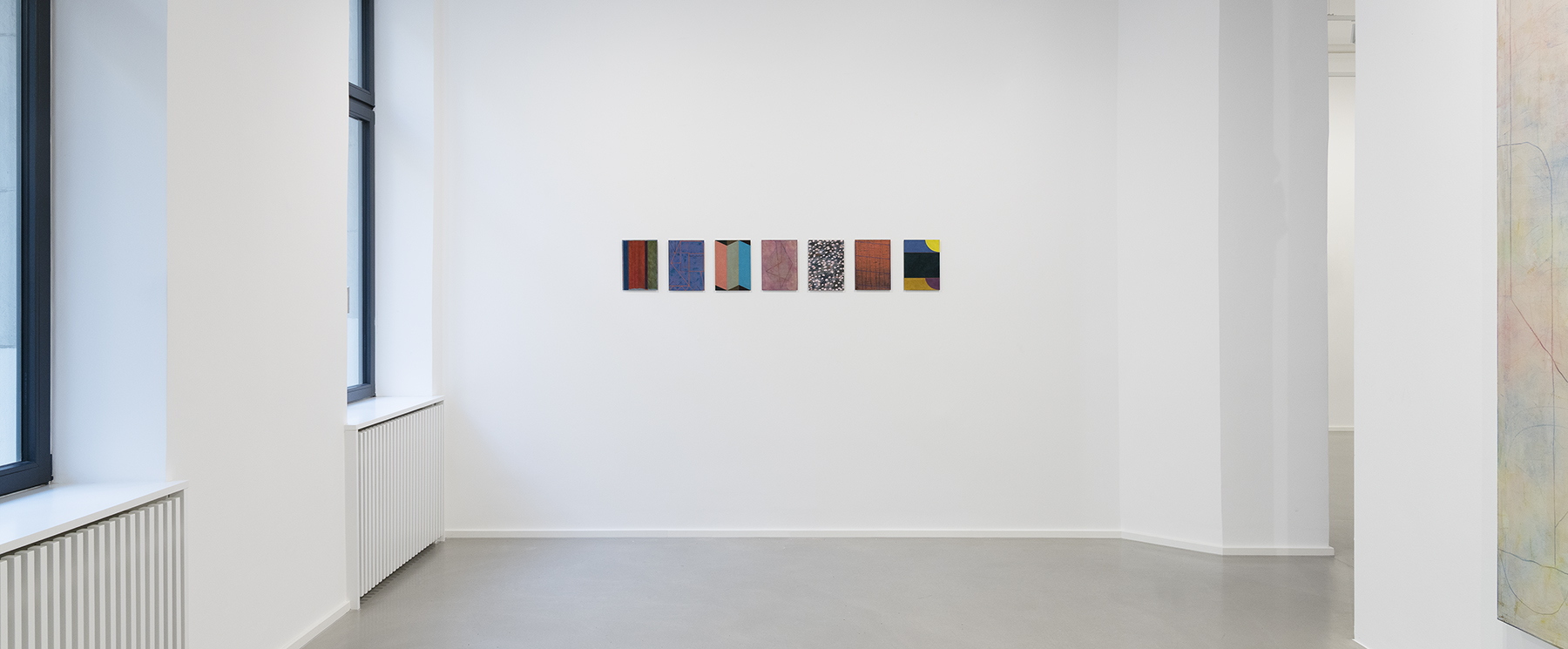
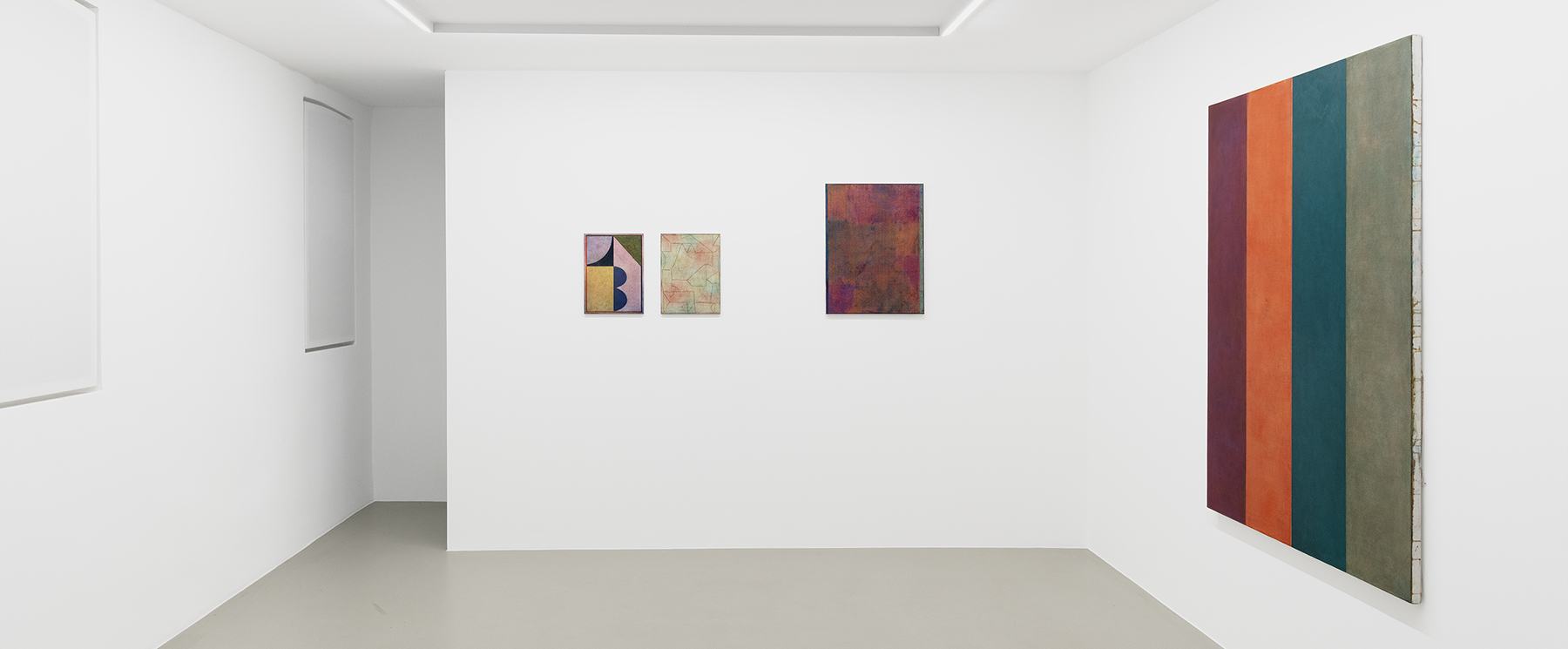
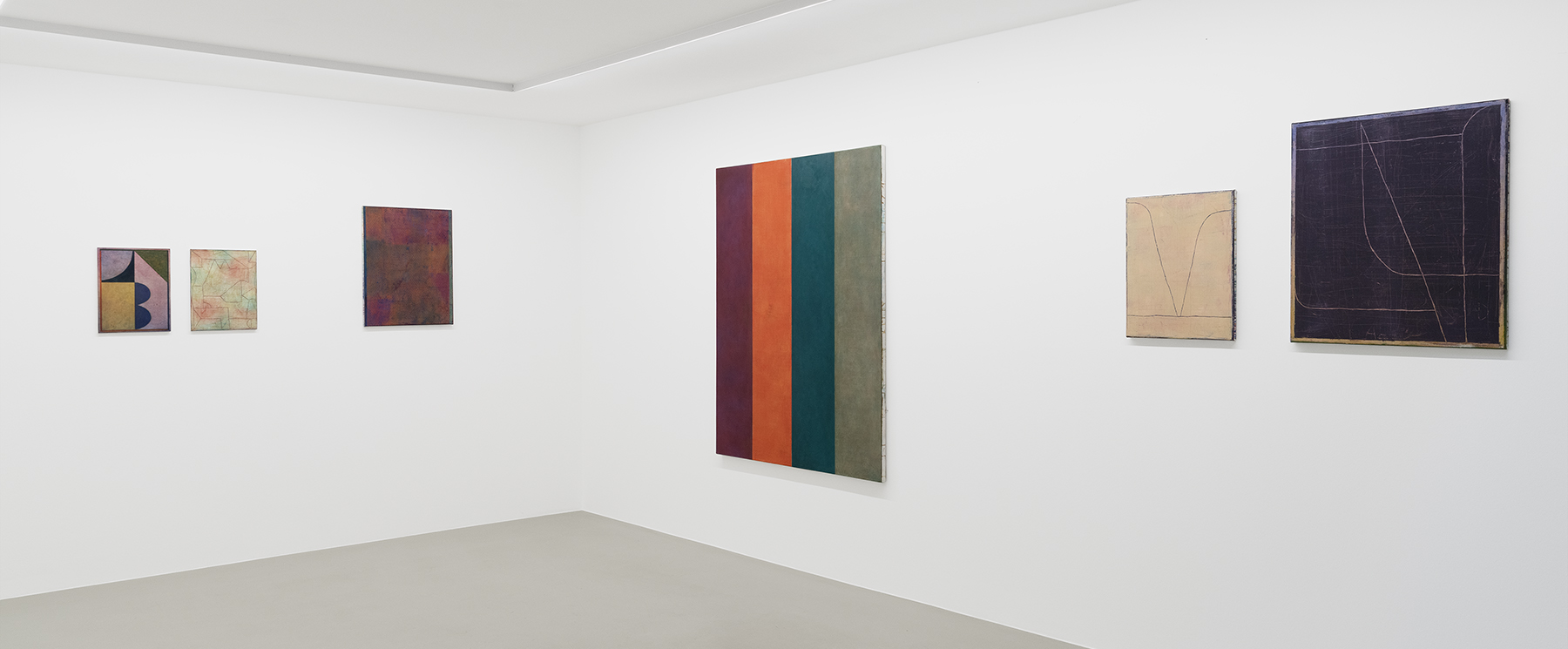

Berlin-based painter Pius Fox presents Walking Forward Looking Backward, his third solo exhibition at Galerie Christian Lethert. The exhibition brings together works on canvas and paper in a wide range of formats, in which he explores aspects of temporality, fragmentation, and opposing dynamics through painting.
It is easy to stumble when looking back while walking forward. The body presses forward while the mind still lingers in the past. The ›image‹ evoked by the exhibition’s title holds the potential for conflict, yet engaging with it is worthwhile. Pius Fox recently put it this way in an interview: »The German word ›Geschichte‹ contains the idea of layers. It refers both to history and to a story. Pretty close to what I am searching for when I want to create depth in a painting.« (Online magazine Masterpiece, no. 102, 2026)
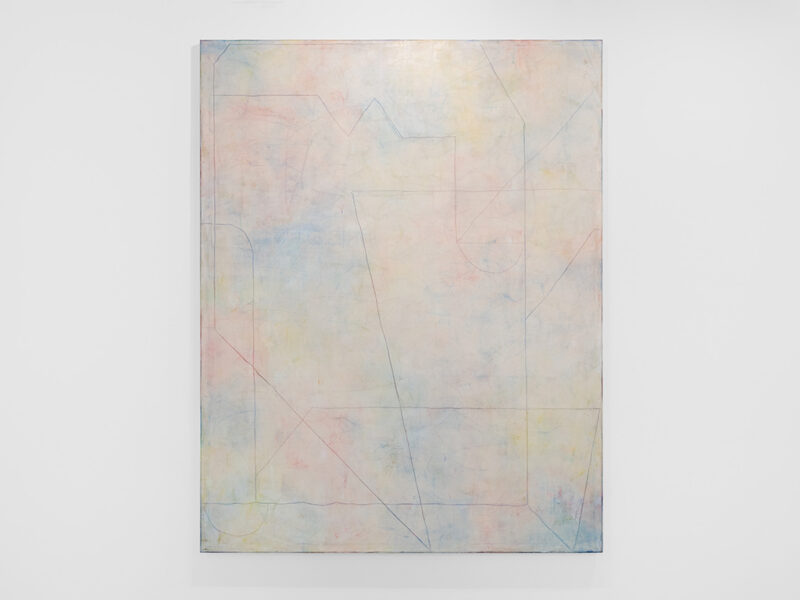
His works take shape through the application of layers of paint, some of which are later sanded down, scraped off, or otherwise removed. The same is true of the largest work in the exhibition, which measures 230 × 180 cm and bears the contradictory title An Old Beginning (2026). The delicate hues, which blend into one another, change depending on how the light falls. Straight and curved lines give rise to planes, which in turn evoke a sense of space.
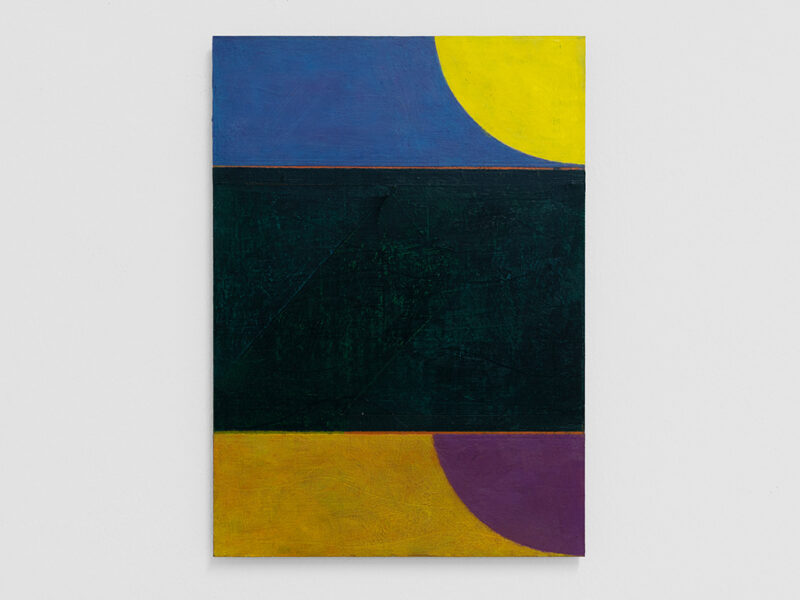
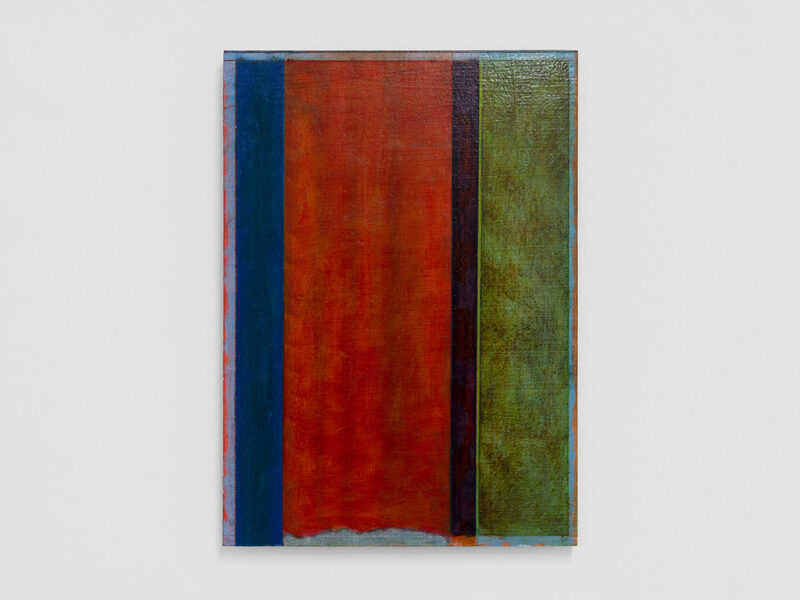
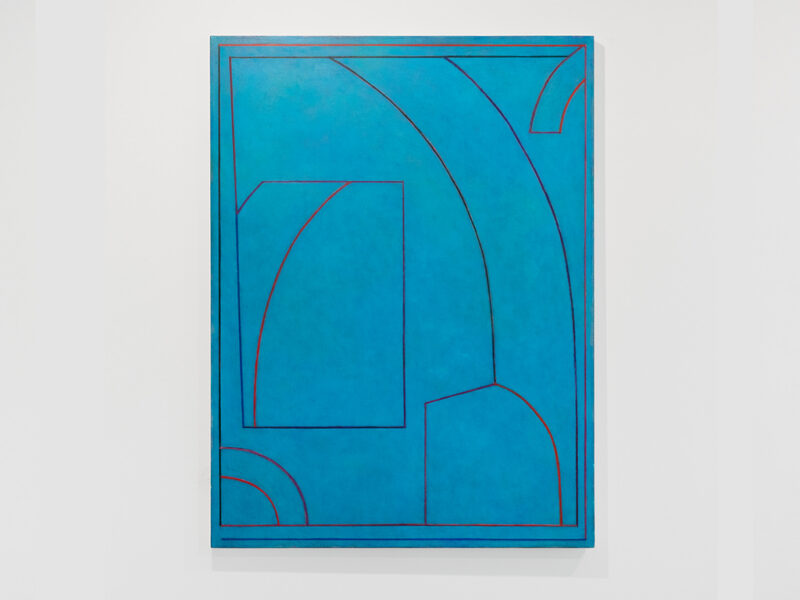
The works in the exhibition open up a variety of pictorial spaces: through lines applied in a stencil-like manner to a monochrome ground, through marks incised into multiple layers of paint, and through references to the palettes of Renaissance masters or icons of modernism. In Pius Fox’s work, these pictorial spaces can always be understood as spans of time as well. They speak of the painting process, of adding and removing layers, of shaping and fading, and of the artist’s intensive engagement with art history. Compelling dialogues emerge across time, alongside recurring cross-references within his own practice. For example, the range of colors in the small-format work Vorhang (2026) reappears in the broad stripes of the much larger work matches (2026). It becomes clear that every history is constructed—a narrative, a frame, an interpretation.