
Jill Baroff River of Shadows
Portfolio
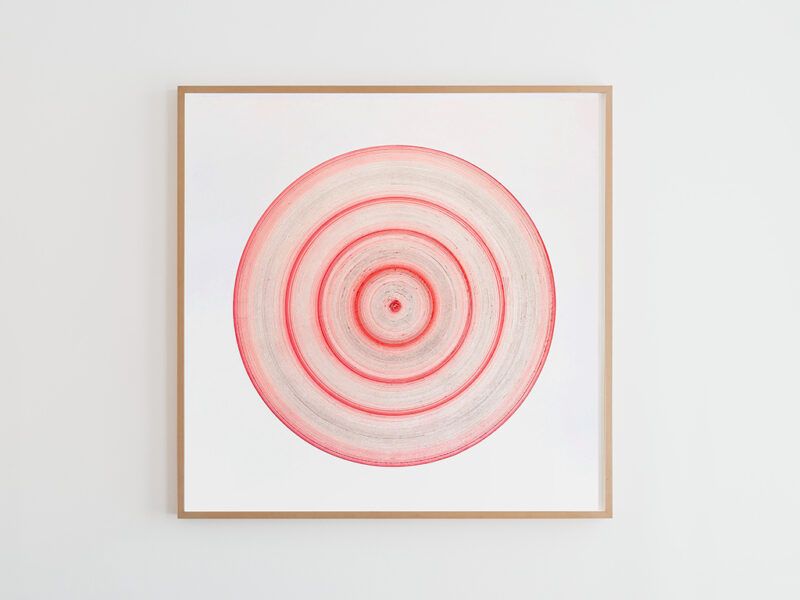
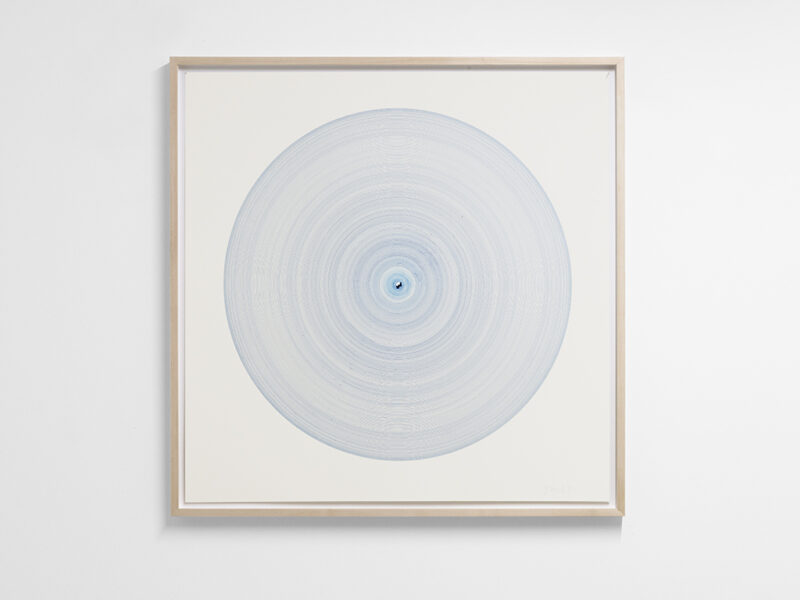
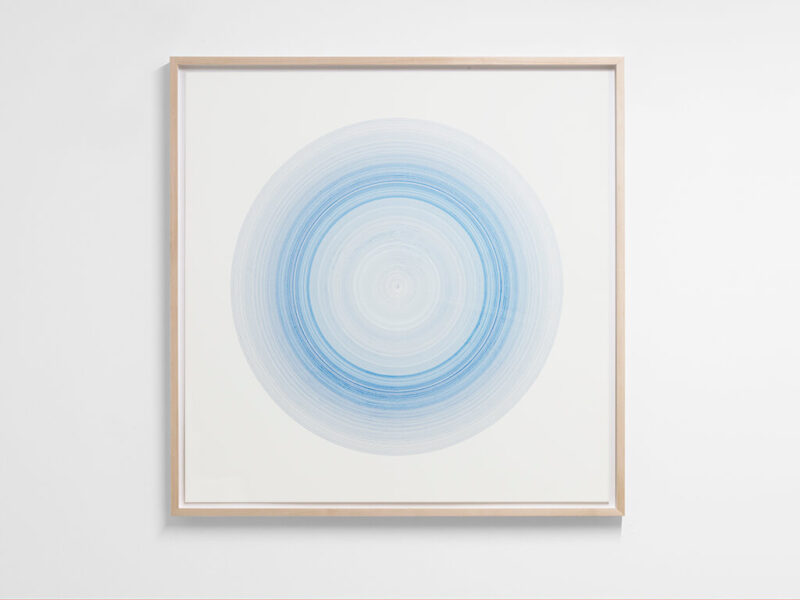
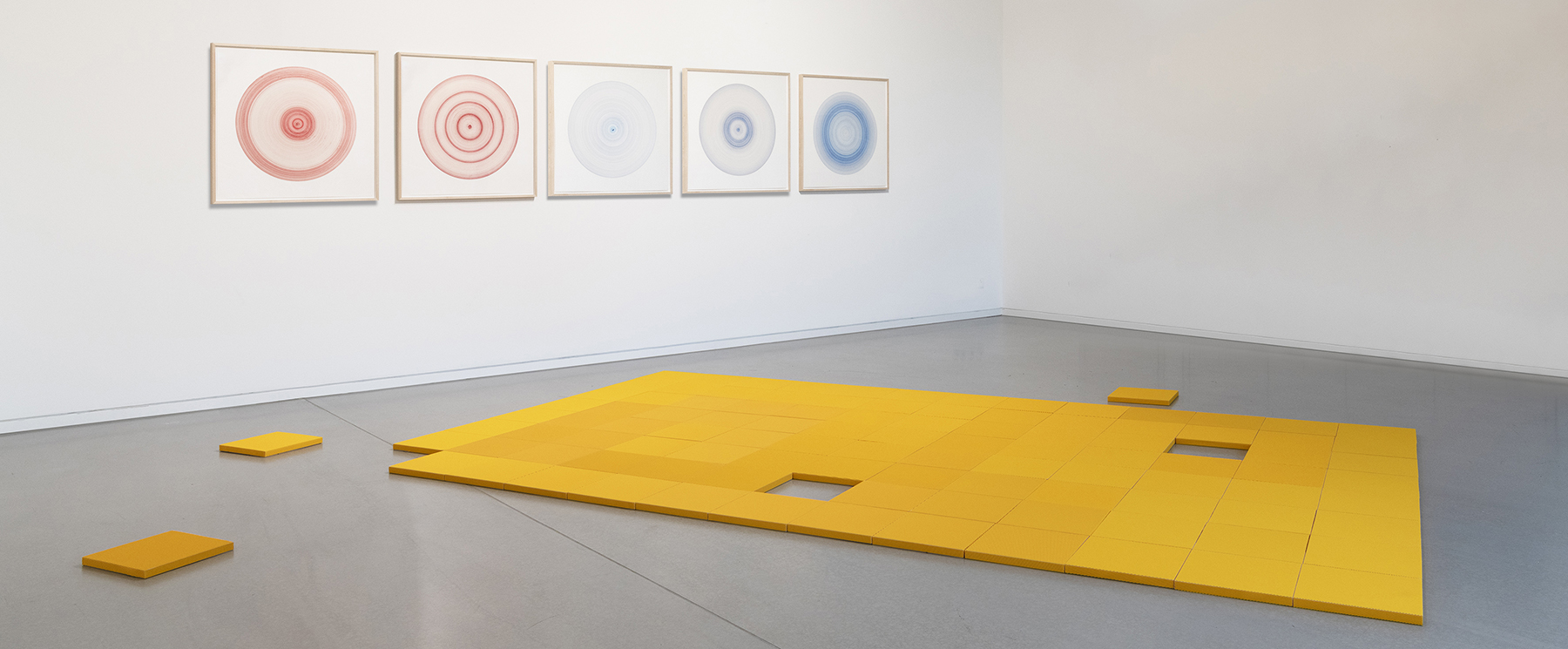
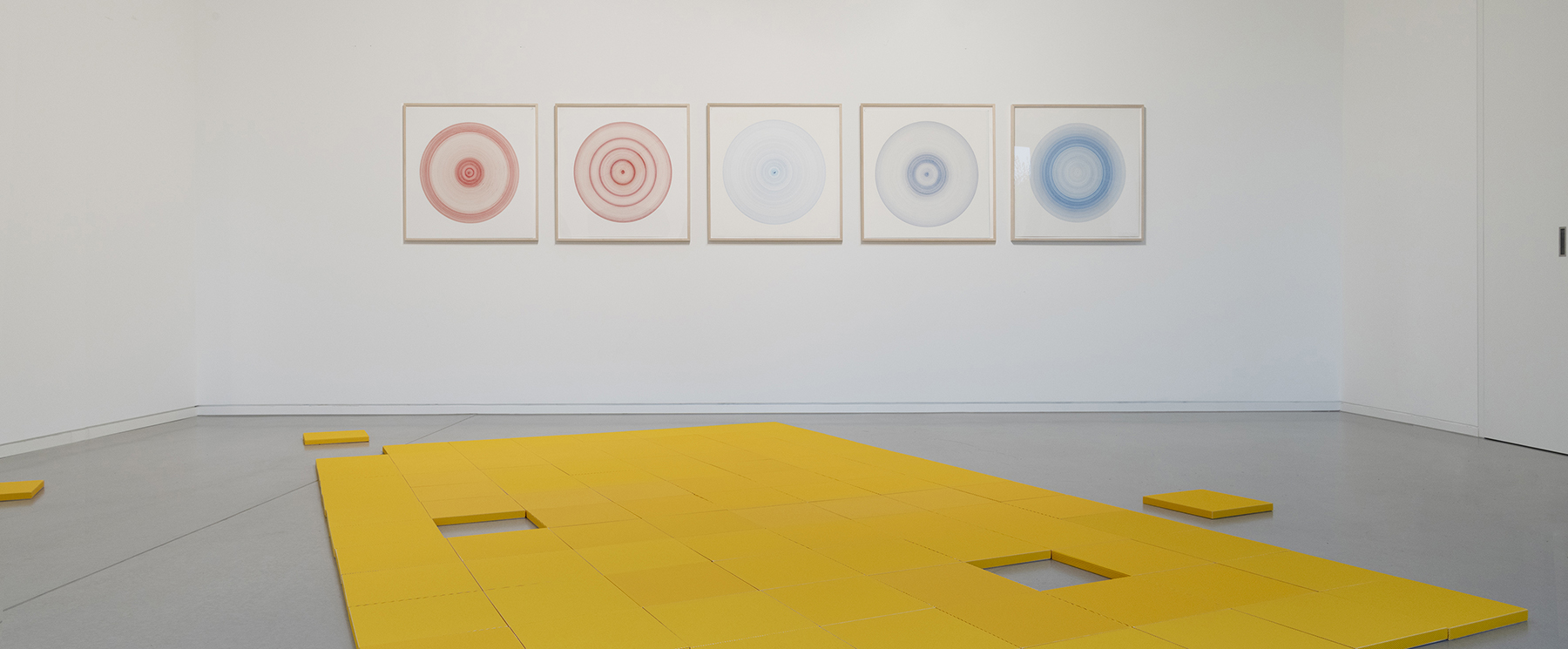
In her online exhibition, American artist Jill Baroff brings together a large-format floor piece and five drawings from her Tide Drawings series. The title »River of Shadows« reflects her artistic exploration of the representation of time and the patterns of movement that flow through nature.
In her Tide Drawings, Baroff captures water levels at various locations within a predefined time period and represents them visually. The title of each work includes the location and time, as in »New York Harbor, Sunday 1, 2, 2005«, 2007, weather phenomena as in »Baltic Blizzard«, 2022, some of which date back considerably, as in »The Great New England Hurricane of 1938«, 2024. The measurements that form the basis of the drawings are freely accessible online. The artist translates the numerical system into a visual one of concentric circles using a compass and ink. The resulting individual patterns are records of ebb and flow, establishing a connection to times already past. They allow us to pause and reflect, and also make the artist, who grew up in the waters around New York, increasingly aware of the changing tides and growing weather extremes.
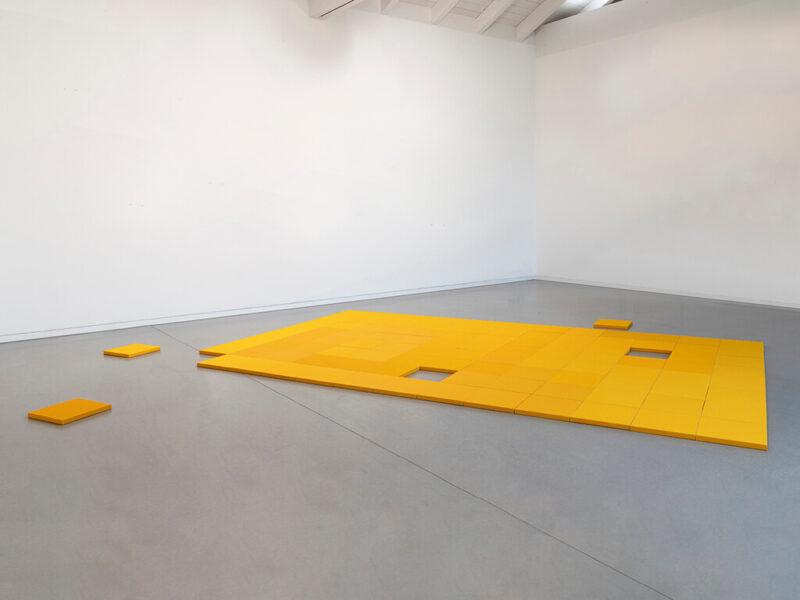
Just as life by the water has had a profound influence on her artistic practice, the years she spent living in Japan have also manifested themselves in her work. In addition to researching Japanese gampi paper, she has studied the significance of ‘empty’ spaces in Japanese architecture. The artist was particularly fascinated by the effects of traditional tatami floors, whose woven surfaces miraculously alter the perception of darkness and light as one moves through rooms and buildings. Thus, she began work on a series of floor sculptures, the Corrugated Floor Works. Among these is the exhibited 104-part floor installation from 2007 made of yellow-dyed corrugated cardboard, whose monochrome surfaces take on infinitely nuanced colors depending on lighting and viewing angle. The arrangement of the 30 x 30 cm individual pieces is determined by the specific spatial conditions while simultaneously following the mathematical Fibonacci sequence (1, 1, 2, 3, 5, 8, etc.). The interplay of concept and openness testifies to a sensitive apprehension of the environment, a profound material sensitivity, and a deep understanding of space and time and how their parameters are constantly changing.
While time progresses inexorably, the exhibited works demand slow viewing and in return enable a connection with time past and simultaneously with the here and now.